
“Ultherapy, Thermage, thread lifting… they are all called lifting, so how are they different?”
This is a very common question during lifting consultations. In the previous article, we explored how to identify where sagging is occurring. Once you have identified your area of concern, it is time to consider the method.
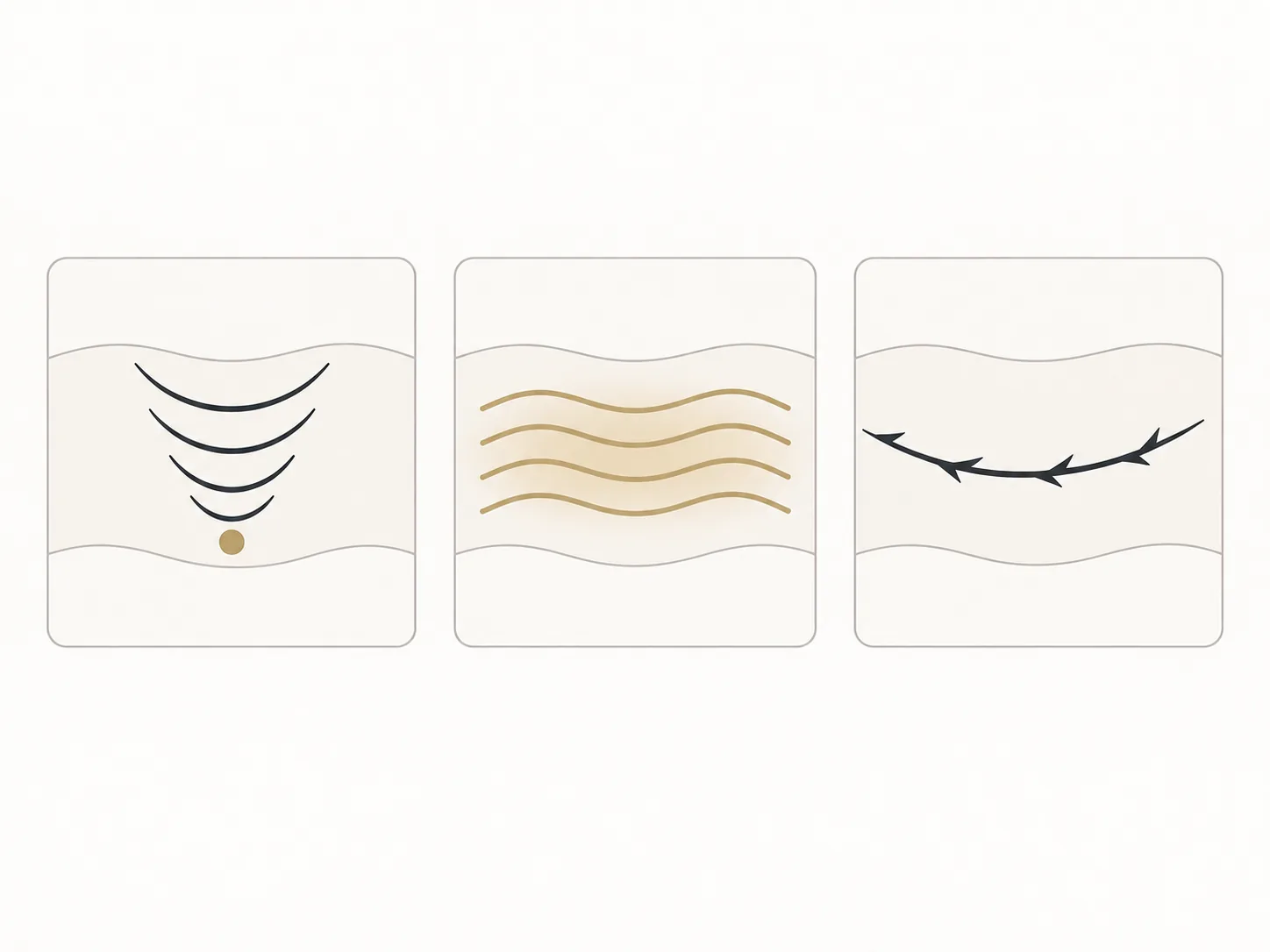
The three methods can be summed up in one sentence: ultrasound focuses on points in deeper layers, radiofrequency broadly heats the dermis, and threads directly pull and secure tissue. They act at different depths, so the concerns they suit also differ.
Three methods compared at a glance
| Category | Ultherapy (ultrasound) | Thermage (radiofrequency) | Cog threads (thread lifting) |
|---|---|---|---|
| Mechanism | Focuses ultrasound at a point to create thermal coagulation points | Broadly heats the dermis with radiofrequency | Barbed threads engage and pull tissue |
| Target layer | 1.5·3·4.5mm, reaching the SMAS layer | Dermis (with epidermal cooling) | Subcutaneous tissue through which the threads pass |
| Main concerns | Sagging cheeks and jawline, less defined facial contour | Fine lines, reduced firmness, stretched pores | Noticeable cheek sagging, jawline and nasolabial fold area |
| Anesthesia | Topical anesthetic cream | Topical anesthetic cream | Local anesthesia or sedation |
| Changes | Gradually over 30–90 days | Gradually as collagen regenerates | Pulling effect visible immediately; settles as swelling and bruising subside |
| Return to daily activities | Usually possible | Usually possible | Allow extra time for bruising and swelling |
Ultherapy and Thermage use heat to stimulate collagen regeneration, so changes appear gradually. Cog threads physically hold tissue in place, so the pulling effect is visible immediately, but insertion and recovery time also need consideration.
Ultherapy: ultrasound focused on points in deeper layers
Like a magnifying glass focusing sunlight, Ultherapy focuses ultrasound at a point to create small thermal coagulation points at 60–70°C. At its deepest, it reaches the SMAS layer, a thin membrane covering the facial muscles. This is why it is often discussed first for sagging of the facial contour itself, such as the cheeks and jawline.
JAYJUN uses Ultherapy Prime. During treatment, ultrasound imaging shows the tissue beneath the skin so that the depth can be selected for each area before energy is delivered.
Thermage: radiofrequency that broadly heats the dermis
Thermage briefly raises the dermal temperature to 40–50°C while cooling the skin surface. It heats a broad area rather than individual points. It is therefore mainly discussed for looser skin texture, more fine lines and enlarged pores, and for thin-skinned areas such as the forehead, around the eyes and around the mouth.
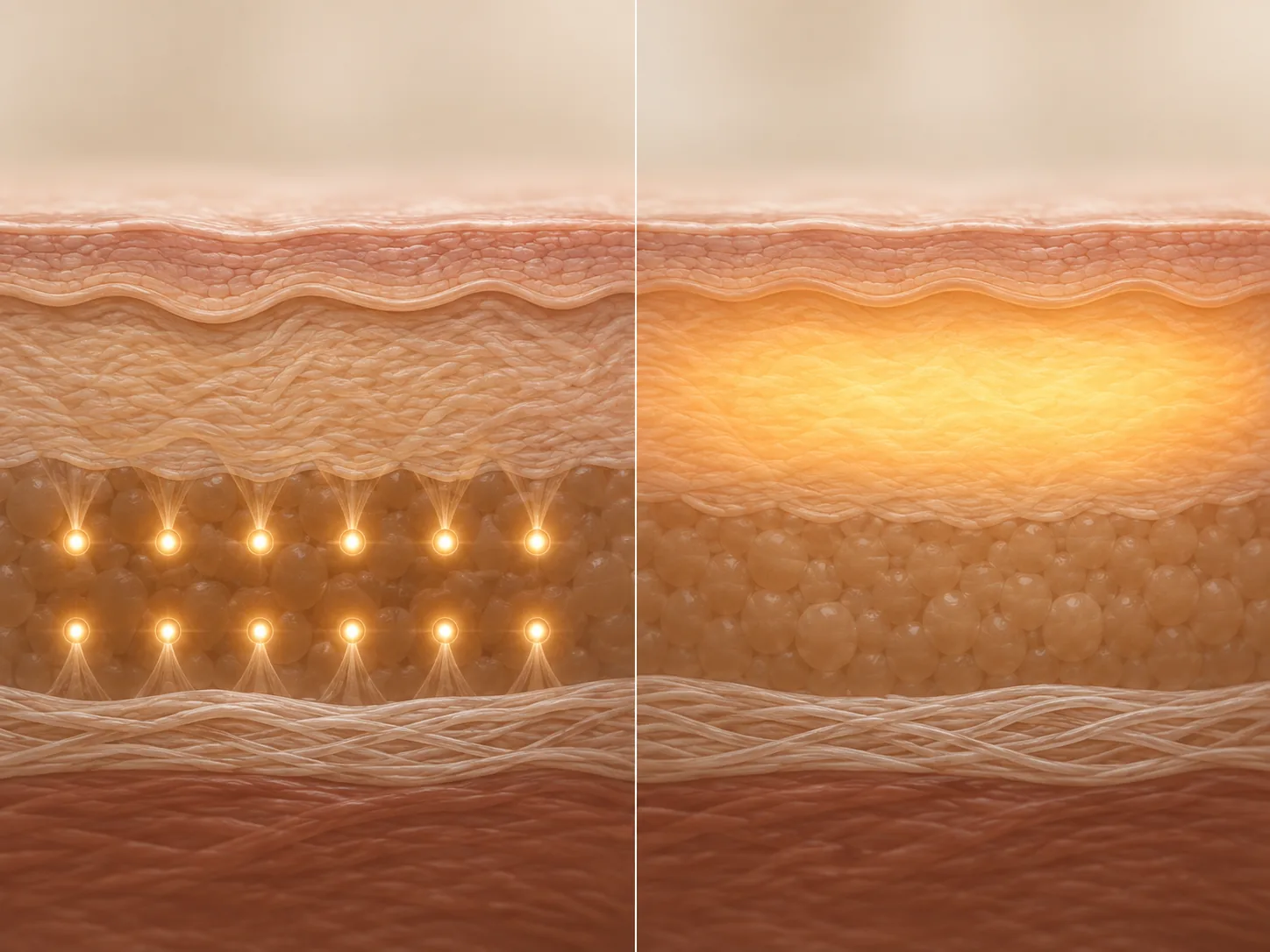
The depths and features of the two devices are explained in more detail in our Ultherapy vs Thermage comparison.
Cog threads: thread lifting that pulls and secures tissue
Cog threads are medical threads with small barbs around their full 360-degree circumference. A small opening is made in the area between the sideburn and the side of the cheekbone. A cannula inserts the threads so that the barbs engage the tissue. The threads are pulled in the desired direction, any thread remaining outside the skin is trimmed, and the area is disinfected to finish.
The main difference from energy-based lifting is that the pulling effect can be seen immediately after treatment. However, the initial appearance includes both swelling and tension, so it may differ from the appearance after swelling and bruising subside.
JAYJUN uses absorbable PDO threads for cog thread lifting. The time at which the threads are absorbed and the duration of the lifting changes are not the same thing, so discuss the expected course during your consultation.
Which method should I discuss first for my concerns?
| If this is your concern | Consider discussing this first |
|---|---|
| Sagging cheeks and jawline have made the facial contour less defined | Ultherapy |
| More fine lines and looser skin texture and pores | Thermage |
| Noticeable sagging and a wish to see a pulling effect quickly | Cog threads (allow for insertion and recovery) |
| Both deeper sagging and skin texture concerns | After examination, plan a combination of methods, including extent and order |
An indistinct jawline may be due to fat or bone structure rather than sagging skin. Even with the same concern, the method recommended first depends on the cause, so use the table to organize your concerns before a consultation. The full range of options, including Oligio X and LDM, is summarized in lifting options at a glance by concern.
Frequently asked questions
Q. Does thread lifting provide more lift than ultrasound or radiofrequency?
The methods differ, making comparison on the same basis difficult. Thread lifting directly pulls tissue, so changes are visible immediately, while ultrasound and radiofrequency show changes gradually as collagen regenerates. Thread lifting, however, involves insertion, so bruising, swelling and recovery schedules need greater consideration.
Q. Can thread lifting and Ultherapy be planned together?
They are sometimes planned together. For example, threads may address deeper sagging while energy-based lifting addresses skin firmness. The extent, order and interval for each area are determined separately after examination.
Q. I am worried about pain. Which method is less painful?
Ultherapy and Thermage are performed after topical anesthesia, and Thermage uses cooling and vibration to reduce discomfort. Cog thread lifting uses local anesthesia or sedation. If you are sensitive to pain, let us know in advance. A specialist in anesthesiology and pain medicine can discuss other anesthesia options.
Q. Can I have thread lifting again if I have had it before?
Tell us the type and date of your previous treatment and where the threads were inserted. After examining the current tissue condition, the clinician will determine whether further treatment is appropriate and its extent.
Why people visit JAYJUN for lifting
In the next article, we will explain the course of a lifting treatment day, from topical anesthesia to going home.